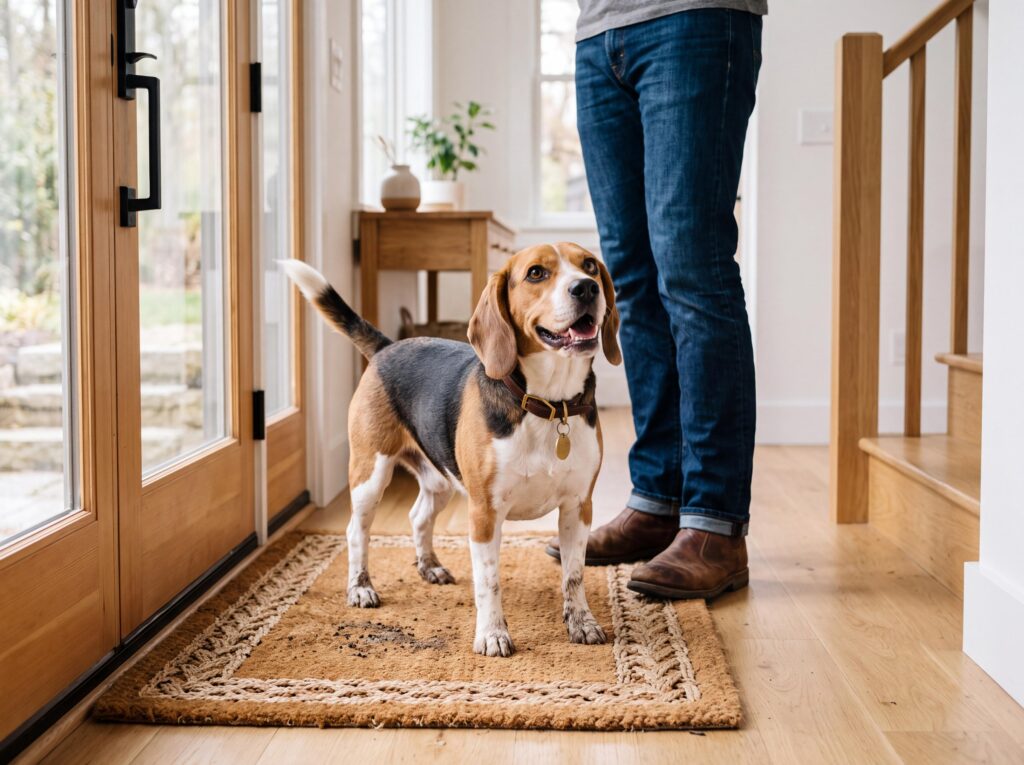
Some days a full bath just isn’t happening. Your dog rolled in something, the weather is cold, you’re short on time, or your dog treats the tub like a crime scene. The good news: most of the time your dog doesn’t need a full bath at all. They need a quick clean in the right spots.
Here’s how to clean a dog without a bath, step by step, using things you probably already have.
When a no-bath clean is enough
A quick clean works well for the everyday stuff:
- Muddy or dusty paws after a walk
- That “doggy” smell building up between baths
- Light dirt on the coat, belly and legs
- Drool, food or crumbs around the face
- Older dogs or puppies who find the tub stressful
It won’t fix everything. If your dog rolled in something oily or truly gross, has a skin issue, or is covered head to tail in mud, give them a proper bath (and check with your vet about any skin problems).
1. Start with a good brush
Brushing is the most underrated cleaning step. It pulls out loose hair, dust and dander before you do anything else, so whatever you use next works on the coat instead of on loose fur. Brush in the direction the hair grows. For double coats, an undercoat rake helps. For short coats, a rubber curry brush does the job.
2. Wipe the coat down
This is where most of the “clean” happens. Use a pet-safe wipe or a damp microfiber cloth and work from head to tail: neck, back, sides, chest, belly and legs. Wipe in the direction of the coat, and flip to a clean side when it gets dirty.
A glove-style wipe makes this much faster, because you just pet your dog and your fingers reach the spots a flat wipe misses, like between the legs and under the chin. That’s exactly why we made the No-Rinse Bath Gloves: slip one on, pet your dog for about a minute, and toss it. No water, no towels.
3. Do the paws properly
Paws carry the most dirt into your home. Wipe the top of each paw, then spread the toes a little and clean between the pads. If they’re really muddy, a shallow bowl of lukewarm water first, then a wipe and a towel, works well. Dry between the toes so moisture doesn’t sit there.
4. Clean the face gently
Use a separate wipe or a soft damp cloth for the face. Wipe around the mouth and muzzle, and gently under the eyes to remove crust or tear staining. Never wipe directly on the eye itself. Dogs with lots of facial folds (bulldogs, pugs) need the folds wiped and dried regularly.
5. Check the ears (outside only)
Wipe the outer ear flap and the visible part of the ear with a soft wipe. Don’t push anything into the ear canal. If you notice a strong smell, redness, discharge or lots of scratching, that’s a vet visit, not a wipe job.
6. Freshen up with a dry option
A dog-specific dry shampoo or waterless foam can help with odor on bigger dogs. Work it into the coat, then brush it out. Only use products made for dogs, since human products can irritate their skin.
7. Wash what they sleep on
If your dog smells again a day after cleaning, the bed is often the culprit. Wash dog beds, blankets and couch covers every week or two. It makes every between-bath clean last longer.
How often should you do this?
A quick wipe-down after walks and a full head-to-tail clean once or twice a week keeps most dogs fresh between baths. Full baths can then be spaced out to what your dog actually needs, which for many dogs is every few weeks to a couple of months, depending on coat and lifestyle.
The 60-second version
- Brush out loose hair.
- Slip on a glove and pet from head to tail.
- Finish the paws and between the toes.
- Gently wipe the face.
- Toss the glove. Done.
Clean pets, happy pets. And no wrestling match in the tub.