
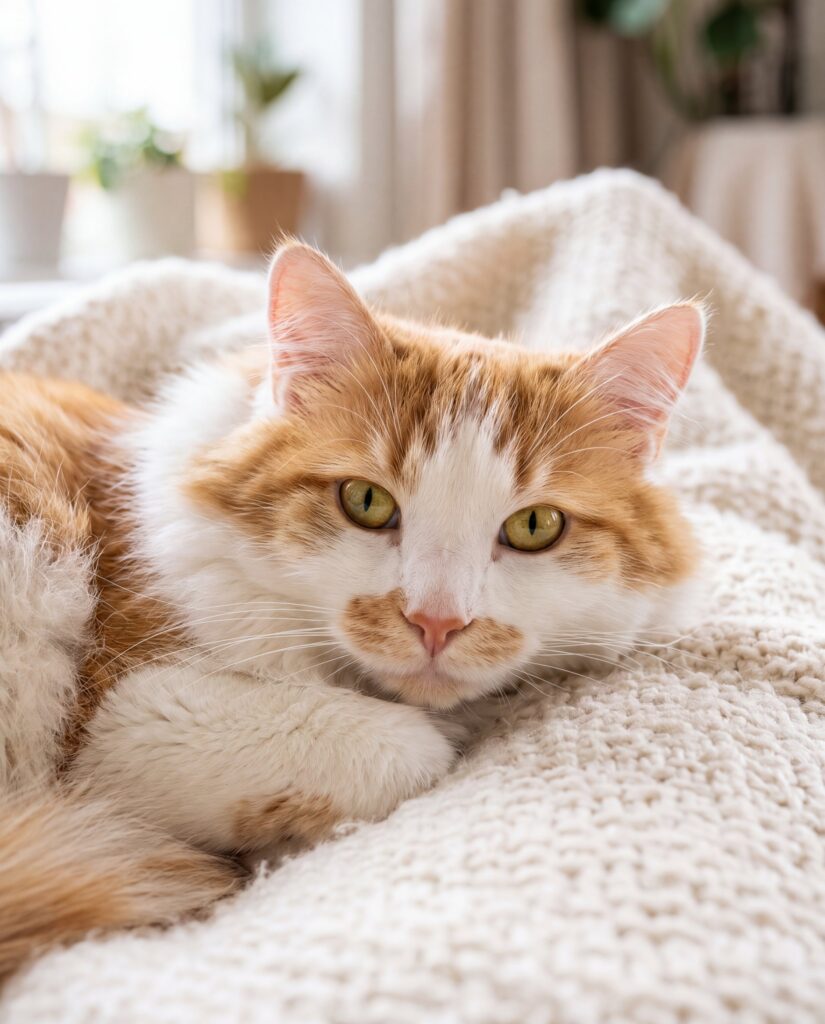
Cats spend a huge part of their day grooming themselves, so most healthy cats rarely need a full bath. Many indoor cats go their whole lives without one. But “rarely” is not “never,” and some cats need more help than others. Here is how to tell what your cat needs.
The short answer
A healthy, short-haired indoor cat that grooms well usually does not need regular baths at all. A bath every few months, or only when they get into something messy, is plenty. Some cats need more help, and that is where a gentle routine between baths comes in.
Cats that may need extra help
- Long-haired cats (Persians, Maine Coons, Ragdolls). Long fur tangles and traps dirt, especially around the back end.
- Senior cats. Older cats often groom less because of stiffness or lower energy.
- Overweight cats. They may not be able to reach their back and hindquarters.
- Hairless breeds (like the Sphynx). With no coat to absorb skin oils, they often need regular cleaning. Follow your breeder or vet’s advice.
- Outdoor cats who come home dusty, muddy or sticky.
- Cats who got into something they should not lick off, like paint, grease or a household product. Call your vet if you think your cat swallowed or touched something harmful.
Signs your cat could use a clean
- Greasy, clumpy or matted fur
- A noticeable smell
- Litter or debris stuck in the fur
- A messy back end on a long-haired cat
- A sudden drop in grooming (worth mentioning to your vet, since it can be a sign something is off)
Why most cats hate baths
Most cats dislike being soaked, held still and surrounded by running water. A bath can stress your cat and end with scratches for you. That is why many cat owners skip full baths and rely on gentler ways to help their cat stay clean.
How to keep your cat clean without a bath
- Brush regularly. A few times a week for short-haired cats, daily for long-haired cats. Brushing removes loose hair, reduces hairballs and spreads natural oils.
- Spot-clean as needed. Wipe away litter, dust or small messes as soon as you notice them.
- Use a gentle wipe-down. A pre-moistened glove or wipe lets you clean your cat with slow, petting strokes, which most cats tolerate far better than water.
- Keep the litter box clean. A clean box means less litter tracked into fur.
- Help seniors and long-haired cats with the spots they cannot reach, like the back and hindquarters.
If you do need to bathe your cat
- Trim nails a day or two before.
- Use a sink or tub with a non-slip mat and only a few inches of lukewarm water.
- Use a shampoo made for cats. Never use human or dog shampoo unless your vet says it is fine.
- Keep water away from the face, ears and eyes.
- Rinse well, towel dry and keep your cat in a warm room until fully dry.
The no-water option
No-Rinse Pet Bath Gloves were made for cats who will not go near a tub. Slip on the pre-moistened five-finger glove and pet your cat the way they already like. You can reach the back, belly, paws and tail with no water and nothing to rinse, then toss the glove when you are done.
The bottom line
Most cats do not need regular baths. Brush often, spot-clean when needed, and use a gentle wipe-down for cats who need extra help. Save full baths for real messes, and check with your vet if your cat stops grooming or has skin or coat changes.
More tips on the blog.